
Blockchain
The L2 compromise is broken, it’s time for a better foundation

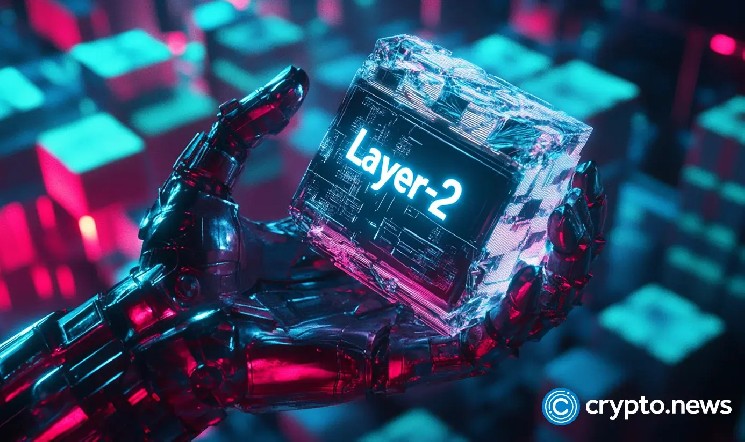
Credit : cryptonews.net
Disclosure: The views and opinions expressed right here belong solely to the writer and don’t characterize the views and opinions of the crypto.information predominant article.
The second quarter of 2025 was a actuality verify for blockchain scaling, and as capital continues to movement into rollups and sidechains, the cracks within the layer 2 mannequin are widening. The unique promise of L2s was easy: scale L1s, however the prices, delays, and fragmentation in liquidity and person expertise proceed to pile up.
Abstract
- L2s had been meant to scale Ethereum, however they’ve launched new issues whereas counting on centralized sequencers that may turn out to be single factors of failure.
- At its core, L2s deal with sequencing and state calculation, utilizing Optimistic or ZK Rollups to decide on L1. Every has disadvantages: lengthy finality in Optimistic Rollups and excessive computation value in ZK Rollups.
- Future effectivity lies in separating computation and verification: utilizing centralized supercomputers for computation and decentralized networks for parallel verification, enabling scalability with out sacrificing safety.
- The “complete order” mannequin of blockchains is outdated; The transfer to native, account-based ordering can unlock huge parallelism, placing an finish to the “L2 compromise” and paving the way in which for a scalable, future-proof Web3 basis.
New initiatives like stablecoin funds are beginning to query the L2 paradigm, asking if L2s are actually safe, and are their sequencers extra like single factors of failure and censorship? Usually they may find yourself taking a pessimistic view that maybe fragmentation is solely inevitable in web3.
Are we constructing a future on a stable basis or on a home of playing cards? L2s should face and reply these questions. If Ethereum’s (ETH) base consensus layer had been inherently quick, low-cost, and infinitely scalable, the complete L2 ecosystem as we all know it could be redundant. Quite a few rollups and sidechains had been proposed as “L1s add-ons” to alleviate the elemental limitations of the underlying L1s. It is a type of technical debt, a posh, fragmented resolution that has been handed over to web3 customers and builders.
You may also like: Truthful launch is crypto’s damaged promise | Opinion
And to reply these questions it’s essential to deconstruct the complete idea of an L2 into its elementary parts, to disclose a path to a extra strong and environment friendly design.
An anatomy of L2s
Construction determines perform. It’s a fundamental precept in biology that additionally applies to laptop techniques. To find out the suitable construction and structure of L2s, we should fastidiously look at their capabilities.
At its core, every L2 performs two essential capabilities: Sequencing, i.e. ordering transactions; in addition to calculating and proving the brand new state. A sequencer, whether or not a centralized entity or a decentralized community, collects, orders, and batches person transactions. This batch is then executed, leading to an up to date standing (e.g. new token balances). For safety causes, this standing have to be settled on the L1 through Optimistic or ZK Rollups.
Optimistic rollups assume that each one standing transitions are legitimate and depend on a problem interval (typically seven days) throughout which anybody can submit proof of fraud. This creates a significant UX trade-off and lengthy finality instances. ZK Rollups use zero-knowledge proofs to mathematically confirm the correctness of every state transition earlier than it reaches L1, enabling near-instant finality. The drawback is that they’re computationally intensive and complicated to construct. ZK proofs themselves can include errors, which may result in catastrophic penalties, and formal verification of this, if in any respect possible, may be very costly.
Sequencing is a governance and design alternative for each L2. Some desire a centralized resolution for effectivity (or maybe for censorship energy; who is aware of), whereas others desire a decentralized resolution for larger equity and robustness. Finally, L2s determine how they wish to do their very own sequencing.
Producing and verifying state claims is the place we are able to do a lot, significantly better when it comes to effectivity. As soon as a set of transactions has been sequenced, calculating the subsequent state is a purely computational job, and that may be finished utilizing only a single supercomputer, centered solely on uncooked velocity, with out the overhead of decentralization. That supercomputer may even be shared between L2s!
As soon as this new state is claimed, its verification turns into a separate, parallel course of. An enormous community of verifiers can work in parallel to confirm the declare. That can also be the philosophy behind Ethereum’s stateless purchasers and highly effective implementations, corresponding to MegaETH.
Parallel verification is infinitely scalable
Parallel verification is infinitely scalable. Irrespective of how rapidly L2s (and that supercomputer) produce claims, the verification community can all the time catch up by including extra verifiers. The latency right here is exactly the verification time, a hard and fast, minimal quantity. That is the theoretical optimum when you use decentralization successfully: to confirm, to not calculate.
After sequencing and standing verification, the L2’s job is nearly full. The ultimate step is to publish the verified standing to a decentralized community, the L1, for final settlement and safety.
This final step exposes the elephant within the room: blockchains are horrible settlement layers for L2s! The primary computing work is finished off-chain, however L2s must pay an enormous premium to finish an L1. They face a double overhead: the restricted processing capability of the L1, burdened by the whole, linear ordering of all transactions, creates congestion and excessive information posting prices. Moreover, they need to endure the L1’s inherent finality delay.
For ZK Rollups that is minutes. For Optimistic Rollups, this includes a weeklong problem interval, a crucial however pricey safety trade-off.
Goodbye, the ‘complete order’ fable in web3
Ever since Bitcoin (BTC), folks have finished their greatest to squeeze all of the transactions of a blockchain into one complete order. In spite of everything, we’re speaking about blockchains! Sadly, this “complete order” paradigm is a pricey fable and clearly exaggerated for L2 settlement. How ironic it’s that one of many world’s largest decentralized networks and the world’s laptop behaves identical to a single-threaded desktop!
It is time to transfer on. The longer term is native, account-based ordering, the place solely transactions that work together with the identical account should be ordered, permitting for top parallelism and true scalability.
World order clearly implies native order, however additionally it is an extremely naive and simplistic resolution. After 15 years of ‘blockchain’, it is time we open our eyes and create a greater future. The scientific area of distributed techniques has already moved from the sturdy consistency idea of the Nineteen Eighties (which blockchains implement) to the sturdy remaining consistency mannequin of 2015 that unleashes parallelism and concurrency. Time for the web3 business to maneuver on as nicely, go away the previous behind and comply with future-oriented scientific progress.
The period of the L2 compromise is over. It is time to construct on a basis designed for the long run, from which the subsequent wave of web3 adoption will emerge.
Learn extra: Web3 is open, clear and depressing to construct | Opinion
Xiaohong Chen
Xiaohong Chen is the Chief Know-how Officer at Pi Squared Inc. and is engaged on quick, parallel and decentralized cost and settlement techniques. His pursuits embrace program correctness, theorem proving, scalable ZK options, and making use of these strategies to all programming languages. Xiaohong obtained his BSc in Arithmetic from Peking College and his PhD in Pc Science from the College of Illinois Urbana-Champaign.


What will shape the next wave of Ethereum scaling

Lawmakers pass key amendments to Armenia’s crypto act

Chiplet Market Growth Driven by High Performance Computing AI and 5G Applications


Bitcoin finds a new home inside America’s largest banks
Credit : cryptoslate.com For years, US banks handled Bitcoin as one thing finest noticed from a distance. The asset lived...

JP Morgan bets on Ethereum for its MONY fund
Credit : cryptoslate.com JP Morgan Chase & Co. has formally entered the chain money competitors, and the prize is not...
Robinhood is constructing a “regional triangle” that unlocks the one thing US regulators won’t permit
Credit : cryptoslate.com Robinhood has been attempting to outgrow its meme-stock popularity lately, and the clearest signal that the corporate...

Crypto just entered YouTube’s $100B creator payouts, offering a novel path to finally exit banks
Credit : cryptoslate.com YouTube has added PayPal’s PYUSD stablecoin as a payout possibility for US creators. The selection runs by...

Bitcoin is now the ultimate “divorce loophole” because courts physically cannot seize the keys
Credit : cryptoslate.com Extra Bitcoin is now off the exchanges, and courts cannot transfer these cash with out keys. This...

PNC becomes first top-10 US bank to offer Bitcoin trading through Coinbase
Credit : cryptoslate.com PNC Financial institution, a US banking big with greater than $569 billion in property below administration (AUM),...


Bitcoin treasury giant Strategy eyes crypto lending shift
Credit : cryptoslate.com Technique, previously often known as MicroStrategy, is contemplating a pivot that may basically change the danger profile...

Tokenization divides BlackRock and the IMF
Credit : cryptoslate.com BlackRock, the world’s largest asset administration firm, has described tokenization as probably the most important market improve...
-
 Analysis3 months ago
‘The Biggest AltSeason Will Start Next Week’ -Will Altcoins Outperform Bitcoin?
-

 Blockchain1 year ago
Orbler Partners with Meta Lion to Accelerate Web3 Growth
-

 Meme Coin9 months ago
DOGE Sees Massive User Growth: Active Addresses Up 400%
-

 Videos1 year ago
Shocking Truth About TRON! TRX Crypto Review & Price Predictions!
-

 NFT12 months ago
SEND Arcade launches NFT entry pass for Squad Game Season 2, inspired by Squid Game
-

 Web 33 months ago
HGX H200 Inference Server: Maximum power for your AI & LLM applications with MM International
-

 Meme Coin1 year ago
Crypto Whale Buys the Dip: Accumulates PEPE and ETH
-

 Videos5 months ago
Stack Sats by Gaming: 7 Free Bitcoin Apps You Can Download Now


